The Plain of Jars: visiting an archaeological landscape
The Plain of Jars is best approached as a landscape of archaeological sites, with Phonsavan as a practical base for exploration. Large stone vessels stand in groups across the Xieng Khouang plateau and its surrounding slopes. The impression can be…
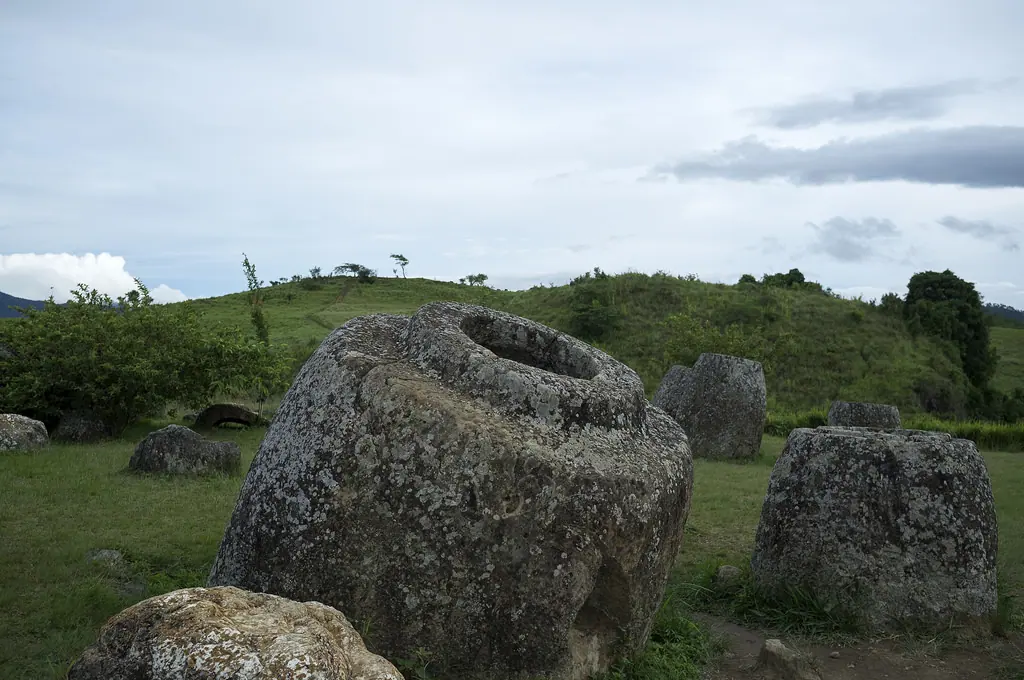
The Plain of Jars is best approached as a landscape of archaeological sites, with Phonsavan as a practical base for exploration. Large stone vessels stand in groups across the Xieng Khouang plateau and its surrounding slopes. The impression can be striking, but looking closely at their setting is more rewarding than treating each jar as an isolated object.
What the evidence tells us
UNESCO identifies the jars and associated remains with Iron Age funerary practices. The World Heritage property includes fifteen component sites containing jars, discs, burial evidence, quarries and other archaeological features. Much about the communities that made and used them remains incompletely understood.
This distinction matters when listening to explanations. Evidence for burial practices is stronger than a claim that everything about the jars' original use is unknown. At the same time, a precise story about who carved a particular vessel or how it was moved should be recognised as a hypothesis unless the guide can explain its basis.
Compare places rather than collecting stops
Choose a manageable combination of accessible sites with a local guide. Notice differences in the scale of the jars, the position of each group and the views across the plateau. Ask how quarrying, transport and the surrounding terrain relate to the objects. Those questions give a second site a purpose beyond repeating the first photograph.
Keep to the marked visitor routes and local access instructions. This is an archaeological landscape with a history of wartime damage, and an apparently empty field is not an invitation to explore away from the managed paths. Do not climb on jars or move fragments.
Allow a full visiting day
Separate the main archaeological day from a long arrival transfer where possible. A rested morning, time for interpretation and an unhurried lunch will do more for the visit than squeezing several distant stops into the last hours before departure. Confirm which sites are open and how the chosen route works before setting off.


Join the discussion
Be the first to share a thoughtful comment.