Ock Pop Tok: understanding a Lao textile before buying one
A finished Lao textile can hold far more work than its size suggests. At Ock Pop Tok's Living Crafts Centre in Luang Prabang, the useful starting point is the making: fibre preparation, dyeing, pattern setting and weaving. Seeing those stages…
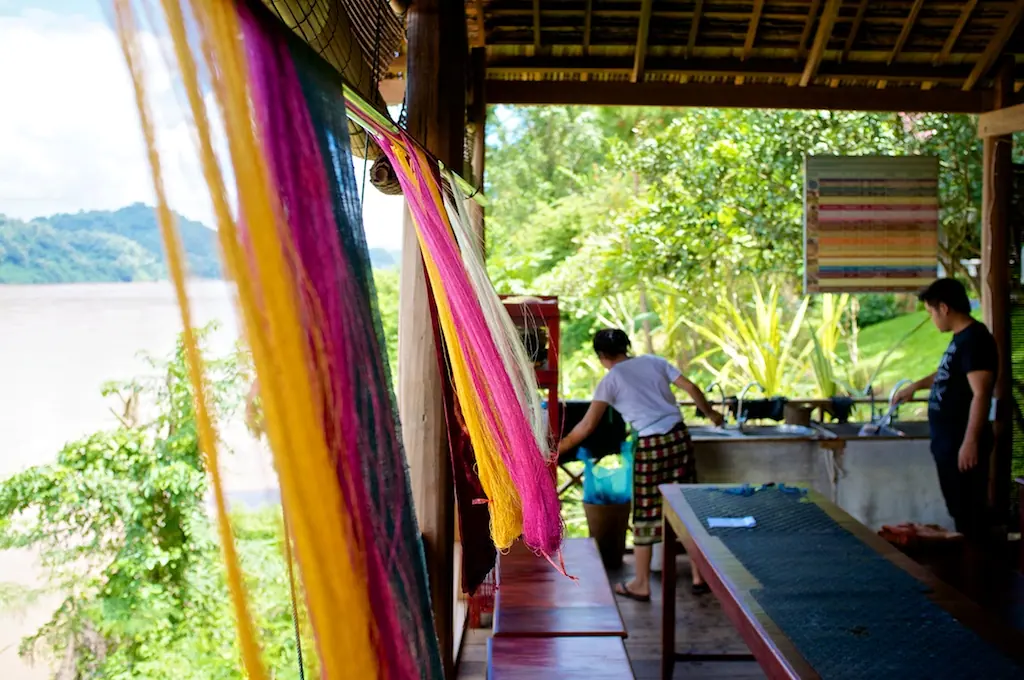
A finished Lao textile can hold far more work than its size suggests. At Ock Pop Tok's Living Crafts Centre in Luang Prabang, the useful starting point is the making: fibre preparation, dyeing, pattern setting and weaving. Seeing those stages changes the questions a visitor asks when later looking at a scarf, wall hanging or length of cloth.
Begin with a demonstration or explanation
The centre offers opportunities to learn about textile production and watch artisans at work. Pay attention to how a pattern is organised before it appears in the fabric. Repetition, colour and the handling of individual threads are deliberate decisions, not decorative effects added after the cloth is complete.
Ask about the fibre, technique and maker associated with a particular piece. Traditions differ across communities, and a meaningful explanation should identify those differences rather than describe every textile as a single national style. Permission is still appropriate before taking close portraits of artisans while they work.
Choose the hands-on experience that interests you
Ock Pop Tok's class programme includes silk weaving and other craft activities, with natural dyeing among the ways to explore colour. A weaving session emphasises structure and patient handwork; a dyeing activity focuses attention on materials and the transformation of fibre. Choose for that experience rather than only for the item you will carry home.
Confirm the available class, duration, age suitability and what is included before booking. Programme details and the amount that can be finished during a session vary, so an older visitor's account should not define the current offer.
Buy with a clearer understanding
After watching or trying a process, ask how a finished textile should be cared for and where it was produced. The time involved in making it becomes a useful basis for understanding its price. Leave space in the visit to look again: a design that seemed simple on arrival may reveal its complexity after the workshop.


Join the discussion
Be the first to share a thoughtful comment.